Letters for Sale: The Billion-Dollar Hustle of Turning Gibberish Into Brand Gold
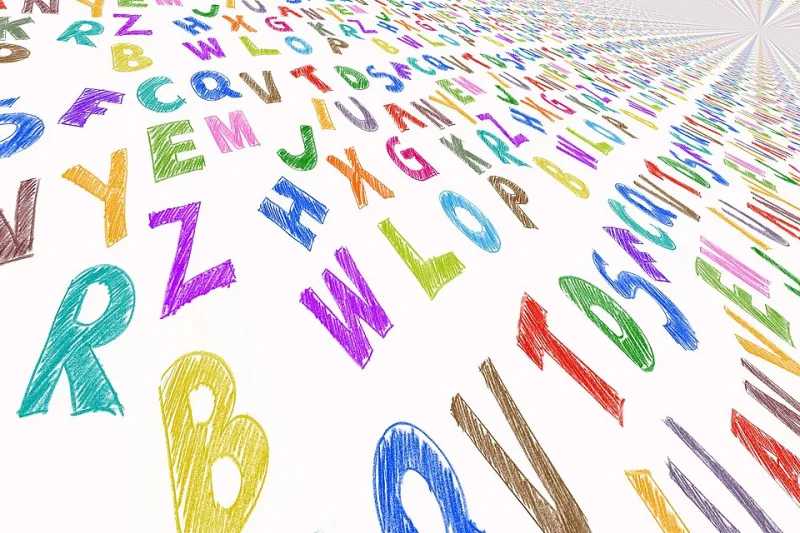
Photo: Raziakhatun12, CC BY-SA 4.0, via Wikimedia Commons
Here at TPLBT, we have a soft spot for meaningless letter combinations. It's basically our whole thing. So when we started noticing that major corporations were essentially stealing our entire vibe — slapping cryptic acronyms on campaigns, products, and storefronts and then refusing to explain themselves — we felt equal parts flattered and mildly threatened.
Welcome to the Acronym Arms Race. Population: every brand with a social media budget and zero chill.
The Strategy Is Simple (And Diabolically Effective)
Here's the play: you launch a product, campaign, or rebrand using a string of letters that means absolutely nothing. You put it on billboards. You buy the domain. You post it on Instagram with no caption. Then you wait.
The internet, being the internet, cannot leave it alone.
Speculation threads erupt on Reddit. TikTok detectives film three-part series. Twitter (fine, X, whatever) becomes a crowdsourced decoding operation. And the brand? The brand just sits there, sipping its oat milk latte, watching engagement numbers climb like they're on a rocket ship fueled entirely by human curiosity.
Marketing professionals have a fancy term for this: "earned media through ambiguity." Normal people call it "being deliberately annoying for profit." Both descriptions are accurate.
The psychology isn't complicated, but it is ruthlessly effective. Human brains are pattern-recognition machines. Present us with an incomplete pattern — a random acronym, a cryptic billboard, a four-letter domain that could mean anything — and we physically cannot stop ourselves from trying to complete it. It's the same reason you'll spend twenty minutes trying to remember that actor's name at 2 a.m. instead of just going to sleep.
Brands figured this out, and now they're using it against you with surgical precision.
Case Studies in Calculated Confusion
Consider the rollout strategy that's become a template for tech startups everywhere: launch with nothing but an acronym, a waitlist, and an air of exclusivity so thick you could choke on it. Companies like VSCO, IFTTT, and GIPHY all built early momentum partly because their names sounded like the output of someone falling asleep on a keyboard. The confusion was the marketing.
The fast-food industry got particularly unhinged about this around 2019-2022. Several major chains ran limited campaigns where they'd reference internal shorthand — menu codes, kitchen abbreviations, supply chain terminology — in their public advertising. The campaigns were designed to make customers feel like they'd stumbled onto insider knowledge. "Wait, what's a QPC?" is a sentence that has generated more free advertising for McDonald's than any paid placement ever could.
And then there's the luxury sector, which has been doing this for decades and deserves full credit for pioneering the chaos. LVMH. BCBG. MCM. The entire luxury acronym ecosystem was built on the premise that knowing what the letters stand for is a class signal. If you have to ask, you can't afford it. If you already know, congratulations — you've been successfully initiated into the cult.
The Spectacular Failures Nobody Talks About Enough
For every VSCO, there's a brand that launched their cryptic acronym campaign and watched it transform into a public relations disaster in real time.
The core miscalculation usually goes like this: the marketing team assumes their audience will find the mystery charming. The audience instead finds it exhausting, condescending, or — worst of all — accidentally offensive when someone inevitably discovers that the acronym has a pre-existing meaning in a completely different context.
The internet has a long memory and an enormous database of slang, medical terminology, government codes, and niche community shorthand. Whatever four letters you've chosen for your artisanal hot sauce brand almost certainly already means something somewhere. Due diligence is not optional.
There's also the patience problem. The ambiguity strategy requires audiences to stay curious long enough to eventually receive the payoff. But attention spans in 2024 are not exactly known for their endurance. If the reveal takes too long, or lands with a thud when it finally arrives, the goodwill evaporates instantly. You've burned your one shot at manufactured intrigue on a campaign that ends with "it stands for 'Quality Products Company.'" Devastating.
Why This Works Better in America Than Anywhere Else
American consumer culture has a uniquely complicated relationship with exclusivity and belonging. We claim to hate gatekeeping while simultaneously organizing enormous portions of our social lives around it. Brand acronyms tap directly into this tension.
Decoding a brand mystery — figuring out what those letters mean before the reveal — feels like winning. It creates a tiny, low-stakes version of the in-group experience. And in a fragmented media landscape where every niche has its own language and every subculture has its own codes, the desire to be the person who gets it has never been stronger.
American brands also benefit from the sheer volume of the US media market. A cryptic acronym campaign that lands in New York, LA, and Chicago simultaneously gets amplified through enough media channels to achieve critical mass before it ever has to make sense. Smaller markets don't have that luxury. Confusion requires scale to become intrigue.
The Uncomfortable Truth
Here's what nobody in a marketing deck will tell you: the acronym arms race is, at its core, a tax on your attention. Every time you spend twenty minutes down a Reddit rabbit hole trying to figure out what some startup's four-letter name actually stands for, you've handed that brand something infinitely more valuable than money. You've given them your time, your curiosity, and your social graph.
And the really wild part? You probably enjoyed it.
We're not here to tell you to stop. TPLBT is literally built on the premise that too many letters can still equal endless entertainment. We're just saying: know the game you're playing. The next time a brand rolls out a cryptic acronym campaign and your brain immediately starts generating theories, that's not an accident. That's a strategy.
The letters don't have to mean anything. They just have to mean something to you.
And somehow, that's enough.