RIP LOL: The Slang Graveyard Is Getting Crowded and Your Favorite Acronym Might Be Next
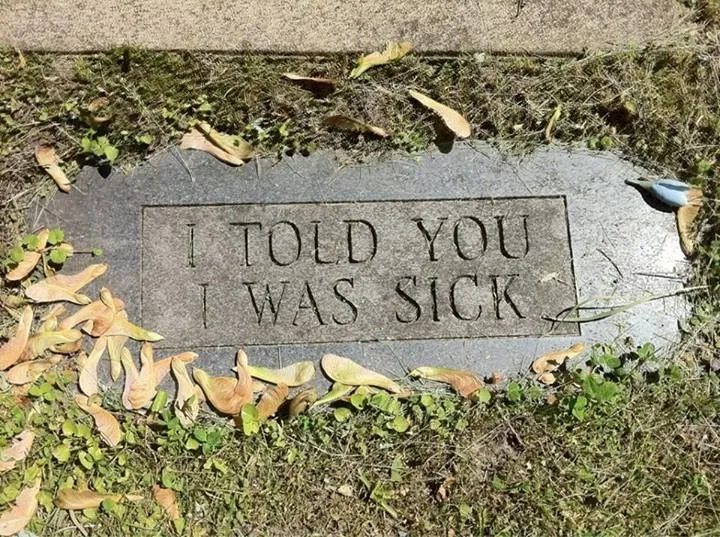
Photo: vintage cemetery gravestones with humorous internet slang text, via i.pinimg.com
Here at TPLBT — a domain that is, itself, a glorious monument to letters that may or may not mean anything — we have a vested interest in the fate of acronyms. So when researchers started whispering that the internet's beloved shorthand was entering a mass extinction event, we grabbed our decoder rings and got to work.
The verdict? A lot of the slang you're using right now is already on life support. And the machine is about to get unplugged.
The Life Cycle of a Slang Term Is Brutally Short
Linguist Dr. Anne Curzan, who studies the evolution of English at the University of Michigan, has described internet slang as operating on "dog years" — meaning one calendar year of cultural exposure equals roughly seven years of linguistic aging. What that means in practice is that a term can go from cutting-edge to cringe in the time it takes a Netflix series to drop two seasons.
Social media analysts who track language trends across TikTok, Instagram, and X (formerly Twitter) have started categorizing slang into three distinct life stages: Emergence, where a term is born in a subculture and feels electric and exclusive; Saturation, where brands, morning news anchors, and your aunt in Ohio discover it; and Extinction, where the original adopters abandon it like a burning building.
The cruel irony? The moment a term goes mainstream is the moment it starts dying.
The Usual Suspects: Who's on Death Row
Let's talk specifics, because generalities are for people who don't want to upset anyone. Internet slang analysts tracking engagement data on platforms like TikTok have flagged several heavy hitters as candidates for imminent retirement.
"No cap" — meaning "no lie" or "for real" — has been in heavy rotation since around 2017, which in internet time makes it practically ancient. Usage data from social listening tools shows the phrase peaked in mainstream adoption around 2021-2022. The tell-tale sign of decline? It started appearing in Subway marketing copy. That's not a flex. That's a death certificate.
"It's giving" surged hard through 2022 and 2023, but analysts note that phrases requiring tonal delivery don't translate well into text-only environments. Without the inflection, the meaning flattens. When the nuance dies, the phrase usually follows.
"Slay" has had a remarkable run, partly because it crossed demographic lines in a way few slang terms manage. But its very ubiquity — from teen TikTok to corporate LinkedIn posts to literal AARP newsletters — has made younger users visibly wince at it. When your grandma uses it unironically, it's over.
"Lowkey" is a fascinating case study because it's been in the twilight zone for years — too embedded in everyday speech to fully die, but too stale to feel fresh. Linguists call these "zombie terms": technically alive, culturally undead.
Why Do Acronyms Die Faster Than Full Words?
This is where it gets genuinely interesting, and where TPLBT's whole brand identity starts feeling weirdly prophetic. Acronyms and initialisms — your LOLs, your SMHs, your IKRs — tend to have even shorter life spans than full slang phrases, and here's why: they're abstract.
A full phrase like "no cap" carries semantic weight. You can trace its meaning, even if you've never heard it. But "LOL"? "SMH"? "IYKYK"? These are pure code. They rely entirely on cultural consensus to function. The moment that consensus fractures — the moment different age groups or subcultures start using the same letters to mean different things, or stop using them entirely — the acronym collapses.
"LOL" is the classic example," says one digital anthropologist who tracks language shifts on social platforms. "It stopped meaning 'laughing out loud' years ago. It became a tone softener, a nervous filler. Now younger users see it as something their parents type. It hasn't disappeared, but it's been hollowed out."
Hollowed out is arguably worse than extinct. At least dead slang has dignity.
The Platforms Are Running the Experiment
What makes this era of linguistic evolution genuinely unprecedented is that we can actually watch it happen in real time, at scale. TikTok's algorithm doesn't just spread slang — it accelerates and compresses the entire life cycle. A sound or phrase can go from niche to omnipresent in 72 hours. The saturation phase, which used to take years, now takes weeks.
This means extinction follows just as fast. Platforms like TikTok have essentially turned language evolution into a speed run.
Social media strategists have started building "slang decay curves" into their content planning — literally scheduling the retirement of certain phrases from brand messaging before those phrases go stale. If your marketing team is still saying "it's giving main character energy" in 2025, someone in that meeting needs to speak up.
What Actually Survives
Not everything dies, of course. Some slang achieves what linguists call "lexical integration" — it stops being slang and becomes just... a word. "Selfie" made it. "Spam" made it (though it had help from a Monty Python sketch). "Ghosting" appears to have made it, having jumped from dating app culture into mainstream psychological and even legal discourse.
The terms that survive tend to share a few traits: they're versatile enough to work across contexts, they fill a genuine gap in existing vocabulary, and they're short enough to feel effortless. Ironically, the acronyms that survive longest are often the ones that stop being recognized as acronyms at all. Nobody thinks of "laser" as an acronym anymore. It just is a word.
The question is whether any of today's digital shorthand has that kind of staying power. Analysts are cautiously bullish on "vibe" (versatile, cross-generational) and "mid" (fills a specific evaluative niche with elegant economy). "Rizz" is a wildcard — Oxford named it Word of the Year in 2023, which is either a sign of legitimacy or the kiss of death, depending on your perspective.
So Should You Care?
Honestly? Yes, a little. Language is culture, and culture is identity. The words a generation adopts — and abandons — tell you something real about what they value, what they're reacting against, and how they want to be seen. The great acronym extinction isn't just a linguistics footnote. It's a live document of who we're becoming.
And for those of us operating in the delightful chaos of too many letters and endless entertainment, watching that document update in real time is, frankly, the whole point.
NGL — and yes, we're aware of the irony — this stuff matters. Even if the phrase "NGL" probably has about eighteen months left in it.
Track the slang graveyard, celebrate the survivors, and never let a brand convince you their use of "slay" is authentic. You deserve better.