Slang Half-Life: Why Your Favorite TikTok Acronym Is Already a Fossil

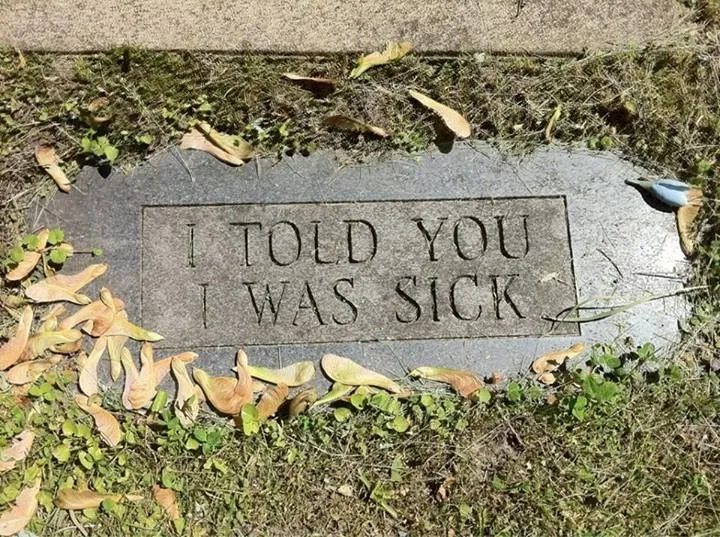
Photo: Hervé Germain @hervegermain4116, CC BY 3.0, via Wikimedia Commons
Somewhere between the third time a brand account used "NPC" unironically and the moment your aunt texted you "IYKYK" about a casserole recipe, the internet slang ecosystem started showing serious signs of collapse. Not a slow, dignified decline — more like a sandcastle at high tide. One minute it's architecture, the next it's just wet sand.
Welcome to the acronym arms race, where the weapons expire before you even learn how to load them.
The Glory Days of Slow-Burn Slang
Cast your mind back — or Google it, no judgment — to the golden era of internet shorthand. "LOL" had a legitimate career spanning the better part of two decades. "BRB" enjoyed a long, comfortable retirement before anyone declared it cringe. "SMH" had time to graduate high school, get a job, and develop a 401(k) before it was officially considered dated.
The lifecycle looked something like this: a phrase or abbreviation would emerge from a specific online community, percolate through forums and early social media, hit mainstream adoption, and then — maybe three to five years later — become the kind of thing a morning news anchor would explain to viewers. That was the death rattle. But at least there was a rattle. At least there was time.
Now? The whole process has been compressed into something resembling a fruit fly's lifespan.
TikTok Broke the Clock
Here's the thing about TikTok that nobody really talks about in polite company: it didn't just change how we consume content. It fundamentally altered the metabolism of culture itself. The For You Page operates like a linguistic centrifuge — spinning ideas so fast that what feels fresh on Monday is actively embarrassing by Thursday.
Acronyms are particularly vulnerable to this acceleration. They're designed for efficiency, sure, but efficiency only matters when people agree on what the letters mean. When a new abbreviation drops into the TikTok ecosystem, it has approximately 72 hours before it fragments into seventeen competing definitions, gets adopted by at least one brand with terrible social media instincts, and then dies the kind of death that makes linguists pour one out.
Take any acronym that trended in the last six months. Go ahead, pick one. Odds are decent that by the time you're reading this sentence, it has either been:
- Corporatized (some fintech startup used it in an email subject line)
- Overexplained (a YouTube video titled "What Does [ACRONYM] Mean?? 2024 Explained!!" now exists)
- Irony-poisoned (it's now only used sarcastically, which somehow makes it both dead and immortal simultaneously)
Congratulations. Your slang is a zombie.
The Supply-Demand Problem Nobody Asked For
Here's where it gets genuinely strange from a cultural economics standpoint. The demand for new slang has never been higher. Gen Z's linguistic identity is deeply tied to the constant churn of fresh terminology — it's a membership card, a tribal signal, proof that you exist in the right corners of the internet. But the supply is so relentless that the market is effectively saturated.
When everyone is inventing acronyms simultaneously, none of them can accumulate the cultural weight needed to actually mean something. It's the linguistic equivalent of printing money until the currency collapses. You've got IYKYK competing with IKYFL competing with whatever six-letter combination someone coined in a Discord server at 2 a.m. last Tuesday. The abbreviations pile up faster than anyone can assign meaning to them.
At some point — and we may be approaching it — new acronyms simply won't have enough cultural real estate to colonize. They'll be born into a world already choked with their predecessors, unable to breathe, unable to spread.
Gen Z's Linguistic Staying Power: A Genuine Question
This raises something worth actually thinking about, beyond the jokes: what does the compression of slang lifecycles mean for the generation that built its identity around linguistic innovation?
Previous generations had slang that stuck. Boomers still say "far out" with a sincerity that is, frankly, charming. Gen X's ironic detachment produced phrases that lingered. Millennials gave us "adulting" and "ghosting" — neither of which shows any sign of leaving the vocabulary anytime soon, as much as we might wish otherwise.
Gen Z's contribution to the lexicon is genuinely creative — arguably the most inventive mainstream slang generation in American history. But the speed at which that creativity is consumed, commodified, and discarded means very little of it will calcify into the kind of durable cultural shorthand that survives a decade.
The generation that invented the language is being robbed of its legacy by the very platforms that amplified it. That's either deeply ironic or deeply sad, and the correct answer is probably both.
Is There a Breaking Point?
Short answer: maybe, but it won't look like what you'd expect.
The breaking point won't be some dramatic moment where everyone collectively agrees that acronyms are over. It'll be quieter and weirder. It'll look like a growing preference for longer, more deliberate language in online spaces — a kind of anti-slang rebellion where typing full sentences becomes the counter-cultural move. It'll look like niche communities deliberately hoarding their terminology, keeping it obscure as a defensive measure against the TikTok centrifuge.
In a strange way, TPLBT — a domain name that is itself a string of letters nobody can immediately decode — is a pretty perfect metaphor for where we're headed. When everything is an acronym, nothing is. When every string of letters could mean something, you stop trusting any of them. The mystery becomes the message.
What Survives the Acceleration
For the record, some slang does survive the churn. The stuff that endures tends to share a few characteristics: it fills a genuine gap in the language, it's flexible enough to evolve without breaking, and it arrived before the TikTok era fully kicked the metabolism into overdrive.
"Vibe" survived. "Slay" survived (and somehow keeps surviving). "Lowkey" is practically a permanent resident of the American vernacular at this point.
But those are the exceptions, not the rule. The acronym graveyard is filling up faster than anyone can maintain the headstones. New abbreviations arrive already wearing funeral clothes.
So the next time you encounter a fresh string of capital letters in a comment section and feel the mild panic of not knowing what it means — don't worry too much. By the time you look it up, there's a solid chance it'll already be gone.
And something new will have taken its place, with an even shorter expiration date stamped on the back.
IYKYK. For now, anyway.